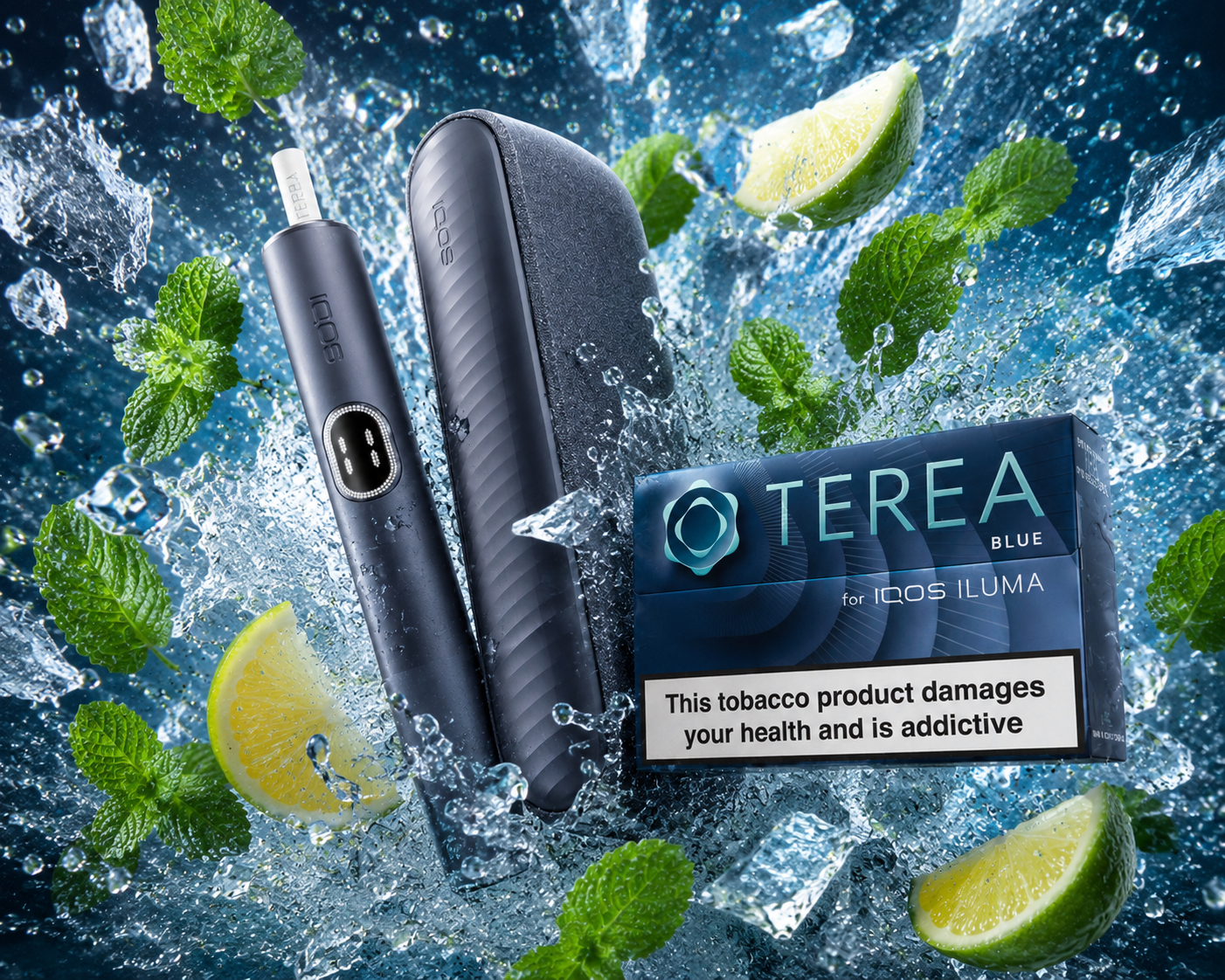
The defining feature of TEREA is hidden inside the stick itself. Developed specifically for the IQOS ILUMA platform, TEREA uses the SMARTCORE INDUCTION SYSTEM™ to heat tobacco through a metal element positioned within the consumable instead of relying on an exposed blade inside the holder. For consumers examining the engineering behind the newer generation, TEREA для IQOS ILUMA is therefore more than a conventional tobacco stick. Its internal structure is deliberately coordinated with the device, creating a system designed around controlled heating, simplified maintenance, and consistent sensory delivery.
The practical difference becomes increasingly obvious through repeated daily use. Earlier blade-based IQOS generations relied on a physical heating element entering the tobacco, creating direct contact between the consumable and the reusable holder. TEREA changes that relationship. The heating element becomes part of the stick, while the ILUMA holder supplies the electromagnetic energy required to heat it. This architecture reduces the number of exposed mechanical components and makes the consumable an active part of the overall thermal system.
The Metal Core Is the Hidden Engine Behind the ILUMA Experience
At the center of a TEREA stick is a metal heating element coated with stainless steel. When the stick is inserted into a compatible IQOS ILUMA device, the holder generates an electromagnetic field that interacts with this element. Heat is consequently generated from the core of the tobacco section rather than transferred through a physical blade penetrating the material.
From a consumer-electronics perspective, this is a significant redesign. The reusable holder no longer needs to contain a narrow exposed heater that repeatedly enters tobacco. Instead, the induction system and electronics remain in the device, while the metal component required for heating is integrated into the consumable. The two parts are therefore engineered to operate as one coordinated system.
This also explains why TEREA is not simply a drop-in replacement for older heated-tobacco sticks. Its internal metal element is essential to induction heating, and its dimensions and internal construction are designed around the electromagnetic system used by IQOS ILUMA.
Blade-Free Architecture Removes a Major Source of Everyday Maintenance
Maintenance is one of the areas where this engineering decision has the clearest lifestyle impact. Blade-based heated-tobacco systems can accumulate tobacco particles around the heating element because the blade repeatedly enters the tobacco section. Regular cleaning can consequently become a routine part of ownership. TEREA and ILUMA approach the problem differently by keeping the heating element inside the consumable.
- The metal heating element is enclosed inside the TEREA stick instead of being exposed in the holder.
- A front sealing section helps limit tobacco residue reaching the device.
- Two-sided filter construction helps reduce loose tobacco material during insertion and removal.
- The protective paper wrap contributes to a cleaner interaction after the session.
- The resulting workflow substantially reduces the need for repetitive internal cleaning.
This should still be interpreted realistically. Simplified maintenance does not mean that an electronic device requires no care whatsoever. Exterior surfaces, charging contacts, storage conditions, and accessories should still be maintained appropriately. The meaningful improvement is much narrower and more practical: the repetitive internal cleaning associated with an exposed heating blade becomes largely unnecessary during normal use.
Fewer Exposed Heating Components Change the Reliability Equation
A physical blade creates a recurring mechanical interface between the device and the consumable. It must enter the tobacco section accurately, remain stable during heating, and withstand repeated insertion and removal. Residue can also accumulate around the component over time.
ILUMA removes that particular point of interaction. The heating element is no longer part of the reusable holder, so there is no exposed blade to bend or contaminate during normal stick insertion. IQOS presents the blade-free architecture as a reliability improvement over earlier generations, based on its own testing. That should be understood as an architectural advantage rather than a guarantee of unlimited device life.
Electronic components, batteries, charging systems, and exterior materials can still experience ordinary wear or accidental damage. The more precise advantage is that one of the mechanically vulnerable elements of legacy designs has been removed altogether.
Specialized Compatibility Is the Trade-Off for Better Integration
TEREA sticks are designed exclusively for IQOS ILUMA devices using SMARTCORE INDUCTION SYSTEM™. They should not be used with previous blade-based IQOS generations, while older blade-oriented consumables are not intended for the ILUMA induction architecture.
That narrower compatibility is a direct consequence of specialization. The stick contains the metal component required for induction heating, so its internal geometry and tobacco construction have to work with the electromagnetic field generated by the holder. Consumers should therefore regard the device and consumable as a matched ecosystem rather than interchangeable pieces of hardware.
Inside TEREA, Airflow and Cooling Are Part of the Flavor Formula
The heating element alone does not determine the sensory experience. TEREA incorporates several internal sections that influence how the heated aerosol travels toward the mouth. Official product information identifies the tobacco section, heating element, front seal, airflow chamber, cooling plug, protective wrap, and filter as distinct parts of the stick.
The airflow chamber is particularly important because it controls how much aerosol passes through the stick during a draw. This influences perceived resistance, density, and smoothness. The cooling plug, made from cellulose acetate, is designed to reduce the aerosol temperature before it reaches the mouthpiece.
These components demonstrate why flavor delivery should be considered a complete engineering process rather than simply a question of tobacco quality. Heating temperature, airflow, cooling, tobacco preparation, and filter geometry all contribute to what the user ultimately perceives.
The result is a more controlled pathway from the heated tobacco core to the mouthpiece. Instead of allowing every part of the session to depend on the interaction between a physical blade and tobacco, the consumable itself provides a standardized internal environment for heat and aerosol movement.
A Structured Tobacco Portfolio Gives the Hardware a Broader Sensory Range
TEREA is offered in numerous tobacco and aromatic formulations, with portfolios varying between markets. Official IQOS descriptions categorize the range through characteristics such as rich, robust, mellow, balanced, refined, fresh, and aromatic profiles. This creates a useful advantage for consumers: the hardware remains constant while the stick determines much of the session’s sensory identity.
- Amber is positioned around balanced and robust tobacco with woody and nutty nuances.
- Yellow offers a mellow tobacco character with brighter, zesty aromatic notes.
- Silver is a refined, balanced profile with subtle aromatic complexity.
- Teak emphasizes a mellow, rounded tobacco character.
- Sienna moves toward a more robust, rounded tobacco profile with warmer aromatic dimensions.
- Turquoise introduces a fresher direction through cooling and citrus-like characteristics.
These descriptions should be treated as sensory guidance rather than laboratory measurements of flavor intensity. Perception varies considerably between individuals, particularly when evaluating cooling, sweetness, woody notes, herbal elements, and aromatic tobacco. Storage and personal draw behavior can also influence the final impression.
Capsule Variants Add a Second Layer to the Sensory Experience
Some TEREA formulations use capsules to introduce an additional aromatic dimension. These variants can combine a basic tobacco character with cooling, berry, fruit, or other flavor directions. The capsule format effectively gives the consumer greater control over the character of the session.
Before activation, the underlying tobacco profile remains prominent. After activation, the additional aromatic component becomes more noticeable, creating a two-stage experience rather than a single fixed flavor. This approach is particularly useful for consumers who want variety without changing devices.
Classic non-capsule formulations remain more appropriate for users seeking a straightforward tobacco experience. Capsule variants, by contrast, make the same induction platform more experimental and flavor-oriented.
Controlled Induction Heating Supports Session-to-Session Consistency
One of the strongest technical advantages of induction heating is the repeatability of the thermal process. The electromagnetic field generated by the holder interacts with a metal element positioned at a predetermined location inside every compatible stick. The heating geometry is therefore standardized before the product ever reaches the consumer.
This does not mean that every session will taste exactly the same. Battery conditions, individual draw patterns, storage, ambient temperature, flavor formulation, and personal sensitivity can all influence perception. However, the underlying mechanism is more controlled because the heating component is fixed within the consumable rather than being an exposed blade that physically enters different tobacco sections.
For flavor development, this consistency is particularly useful. Tobacco blends can be formulated around a known heating position, airflow structure, and cooling pathway. The result is a closer relationship between product formulation and hardware behavior.
The Internal Core Also Helps Explain the Cleaner Sensory Character
Heating tobacco rather than burning it changes the physical process that produces the aerosol. There is no conventional combustion of the tobacco material, so the experience does not involve the ash and smoke associated with a traditional cigarette.
The absence of combustion does not mean an absence of aroma. TEREA still produces tobacco-containing aerosol with a recognizable scent, and aromatic or cooling variants can have distinct ambient characteristics. However, compared with conventional cigarette smoke, the surrounding aroma can be significantly less persistent.
That difference has practical lifestyle relevance. The exact aroma footprint depends on ventilation, room size, fabrics, the selected formulation, and individual sensitivity, so it is more accurate to describe the effect as a significant reduction rather than promise completely odor-free use.
Why the Two-Filter Construction Matters During Everyday Use
The internal filter arrangement is another small engineering detail with a noticeable practical effect. TEREA uses filter sections at both ends of the tobacco stick, helping contain the tobacco material and reduce loose particles entering the holder.
This complements the front seal and protective wrap. Together, these components create a more contained consumable that interacts with the device without exposing the reusable holder to the same degree of tobacco residue associated with blade-based designs.
For frequent users, that distinction is important. A reduction in residue may seem minor after one session, but across hundreds of sessions it becomes a meaningful reduction in maintenance friction. The user spends less time managing the device and more time simply using it as intended.
The Real Lifestyle Upgrade Is the Elimination of Repetitive Friction
TEREA’s most convincing consumer benefit is cumulative rather than dramatic. The heating element is moved inside the consumable. The holder loses its exposed blade. The stick is sealed against loose tobacco. Airflow is managed through an internal chamber. Cooling is built into the structure. These individual decisions reinforce one another.
The resulting ownership experience is simpler because fewer small tasks interrupt the routine. There is no exposed blade requiring regular internal cleaning, no need to manipulate the tobacco around a heating element, and less concern about residue accumulating inside the holder during normal use.
That is where the engineering becomes a genuine lifestyle improvement. A few seconds saved once are insignificant; a maintenance step removed from hundreds of repeated sessions is much more meaningful.
What Consumers Should Understand Before Choosing TEREA
There are still important limitations. TEREA is designed specifically for compatible IQOS ILUMA devices and should not be used with earlier blade-based generations. The internal metal element also means the sticks should never be dismantled or swallowed. Used sticks should be disposed of appropriately and kept away from children and pets.
TEREA contains nicotine, which is addictive, and heated-tobacco products are not risk-free. The engineering benefits described here concern convenience, maintenance, mechanical architecture, and sensory consistency rather than an assertion that the product is harmless.
From a consumer-electronics perspective, however, the TEREA and ILUMA ecosystem is notable for how coherently its components work together. The internal metal core enables induction heating. The blade-free holder removes a major mechanical and maintenance concern. Seals and filters help contain tobacco material, while the airflow chamber and cooling plug influence the quality of aerosol delivery. Finally, the broad range of tobacco, cooling, aromatic, and capsule formulations gives users meaningful sensory choice without requiring different hardware.
The most important innovation is therefore not a single specification. It is the integration of the stick and device into one engineered heating system. By moving the heating element into the consumable and optimizing the internal core, TEREA creates a more streamlined daily workflow, massively simplified maintenance, fewer exposed mechanical components, and a more controlled relationship between heat, tobacco, airflow, cooling, and flavor.